
Glycerol Production in Beer Yeasts
When evaluating mouthfeel, brewers first look to the grain bill, mash temperature, and water chemistry.
However, yeast metabolism plays an equally decisive role through the synthesis of glycerol. Did you know that it is the most abundant fermentation byproduct in beer after water, ethanol, and carbon dioxide?
Glycerol provides natural viscosity, roundness, and palate weight, softening alcohol warmth and hop bite. To map how yeast genetics influence finished beer texture, Escarpment Labs evaluated glycerol concentrations across 46 pure culture strains in a standardized 12.5 °P all-malt wort using high-performance liquid chromatography (HPLC). Ales were fermented at 22ºC; Lagers at 15ºC. A second dedicated lager experiment was later conducted at 12ºC.
The Biochemistry & Genetics of Glycerol Synthesis
Glycerol is produced as a side branch of the core glycolytic (sugar breakdown) pathway. During sugar metabolism, a fraction of the intermediate dihydroxyacetone phosphate (DHAP) is reduced to glycerol-3-phosphate (G3P) and subsequently dephosphorylated into free glycerol. This happens as a side consequence of glycolysis, which in brewing, ultimately leads mostly to ethanol (alcohol) production.
       D-Glucose ──► [Glycolysis] ──► DHAP ──► G3P ──► Glycerol
                                       │
                                     [GPDH]
                               (NADH ──► NAD⁺)
The primary enzyme in this pathway is the NAD⁺-dependent glycerol-3-phosphate dehydrogenase (GPDH), encoded by the GPD1 and GPD2 genes.
The baseline amount of glycerol a yeast strain produces is largely hardcoded. Genetic polymorphisms (mutations, gene copy-number variations, and differences in promoter regulation) across individual Saccharomyces lineages dictate how much carbon flux is diverted into glycerol synthesis versus ethanol. This means strain choice can affect the final glycerol concentration in your beer.
Why Yeast Produces Glycerol
Yeast synthesizes glycerol for two main survival functions:
- Redox Balance: When yeast cells grow and bud, synthesizing amino acids and lipids generates excess cytosolic NADH. Under anaerobic fermentation conditions, the cell uses the glycerol pathway as a "metabolic valve", oxidizing NADH back to NAD+ so glycolysis can continue uninterrupted.
- Osmoregulation: Concentrated wort exerts osmotic pressure, threatening to draw water out of the cell. Through the High Osmolarity Glycerol (HOG) pathway, yeast produces and retains intracellular glycerol as a compatible solute, equalizing osmotic pressure and protecting cellular machinery from dehydration.
Sensory Impact in Beer
- Viscosity: Glycerol adds physical "slipperiness" and perceived body. While its sensory sweetness threshold is relatively high (~1.0% v/v), sub-threshold concentrations round out rough edges and enhance palate fullness.
- Low-Dextrin Balance: In bone-dry beers where residual dextrins have been completely consumed, elevated glycerol levels prevent the finished product from tasting hollow or watery.
Results - Glycerol in Beer Yeasts
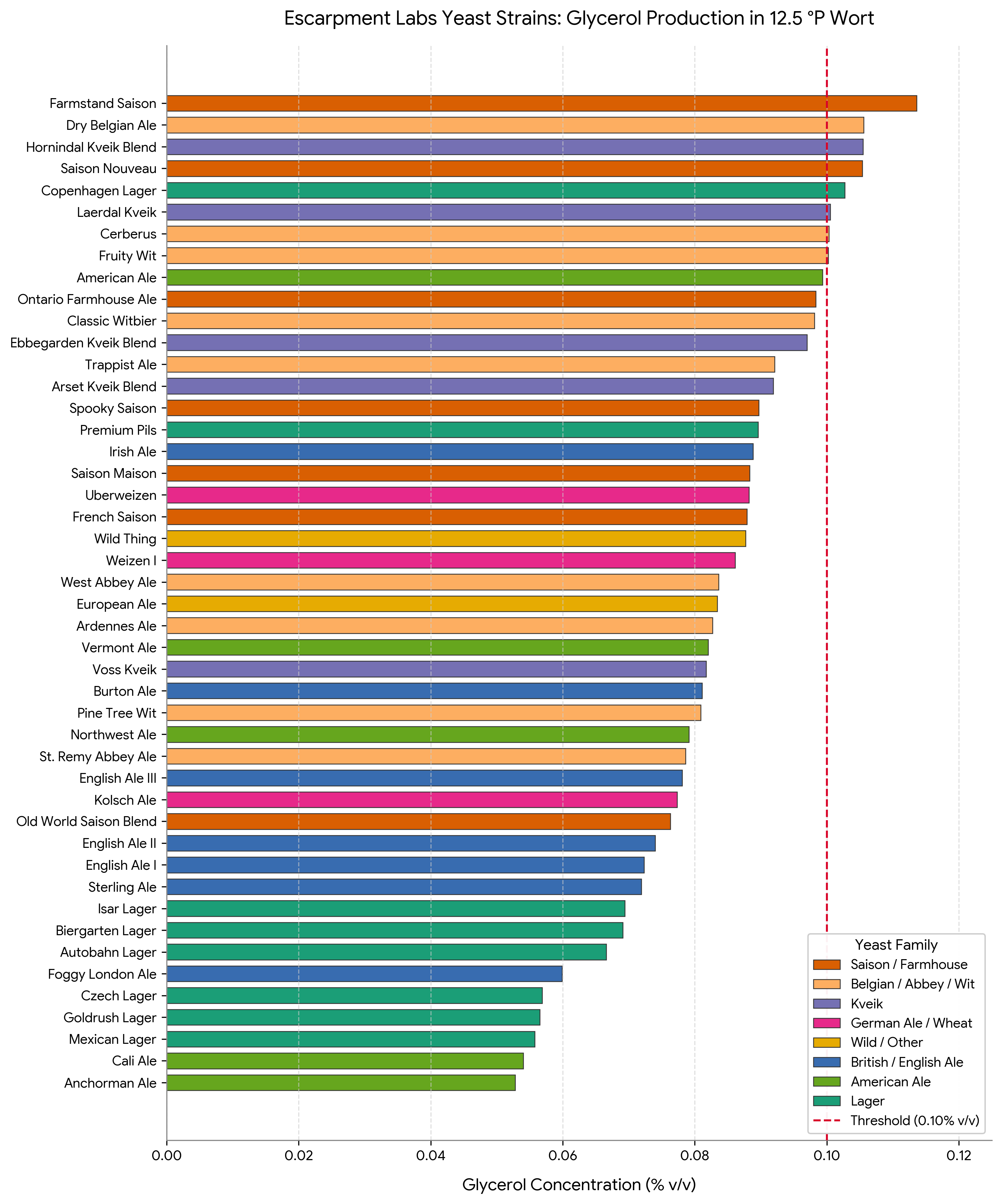
Escarpment Labs screened 46 strains under identical 12.5 °P fermentation conditions to make a comparison.
(Note: data are from a historical screening from several years ago; newer Escarpment Labs strains developed since this trial are not included.)
Across the tested portfolio, glycerol concentrations ranged from 0.05% v/v to 0.11% v/v, which is a 2.15-fold difference between the lowest and highest producing strains.
Strain Comparisons & Brewing Takeaways
Saison: Built-in Body for Attenuative Fermentations
Saison strains sit near the top of the dataset, led by Farmstand Saison (0.11% v/v, the highest in the trial), Dry Belgian Ale (0.11% v/v), and Saison Nouveau (0.11% v/v). Highly attenuative and diastaticus strains break down long-chain dextrins, leaving final gravities near 1.000-1.004 SG. Their elevated glycerol production compensates for the absence of residual sugars, providing mouthfeel despite extremely low residual sugars.
Kveik: Retained Farmhouse Stress Adaptations
All kveik strains in the trial yielded above-average glycerol, led by Hornindal Kveik Blend (0.11% v/v) and Laerdal Kveik (0.10% v/v), followed by Ebbegarden Kveik Blend (0.097% v/v), Arset Kveik Blend (0.092% v/v), and Voss Kveik (0.082% v/v). Having adapted to high-gravity, high-temperature farmhouse brewing, kveiks seem to be prone to producing higher levels of glycerol. In modern brewing, this translates to beers that maintain texture and roundness even when fermented warm or pitched into high-ABV worts.
Hazy Strains
Comparing two popular hazy IPA strains reveals an important metabolic contrast: Despite being famous for producing soft beers, Foggy London Ale produces less glycerol than Vermont Ale, which is known to be more challenging to produce soft beers with. The key difference is likely in the attenuation of the yeasts. Foggy London leaves more residual sugars, which will directly contribute to higher percevied mouthfeel and sweetness. Note: If you want a strain with even more glycerol than Foggy London, look to Superfog.
American Ales
Traditional West Coast ale strains Anchorman Ale (0.05% v/v) and Cali Ale (0.05% v/v) are the lowest glycerol producers in the entire screening. This low output yields the dry, crisp finish expected of classic West Coast IPAs, leaving hop bitterness unmasked. Conversely, American Ale produces 0.1% v/v, presenting an option for higher glycerol in an otherwise clean background.
Lagers
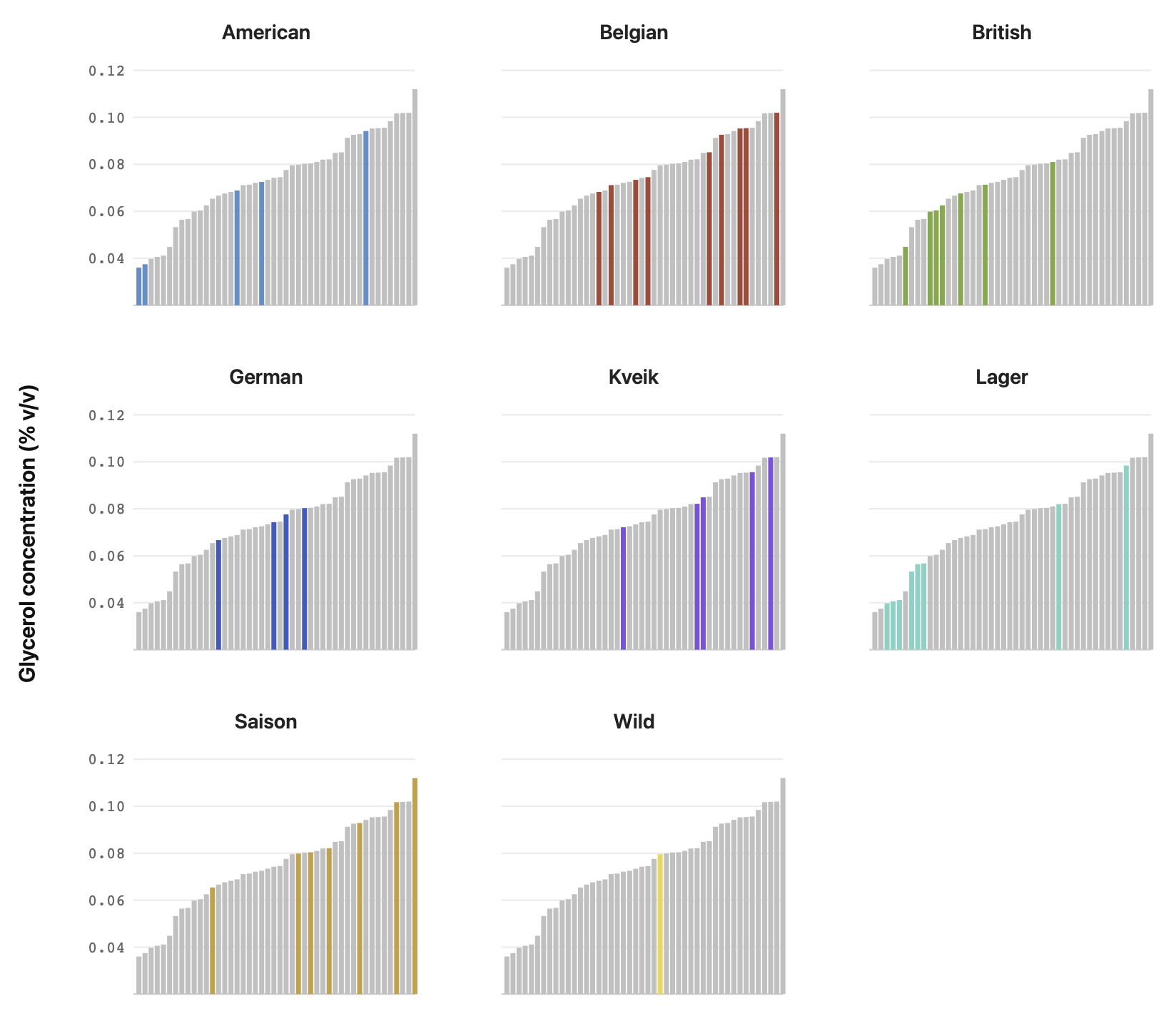
Across both our original strain screening and recent 12 °C lager trial, lager yeasts (Saccharomyces pastorianus) show a range of glycerol synthesis.
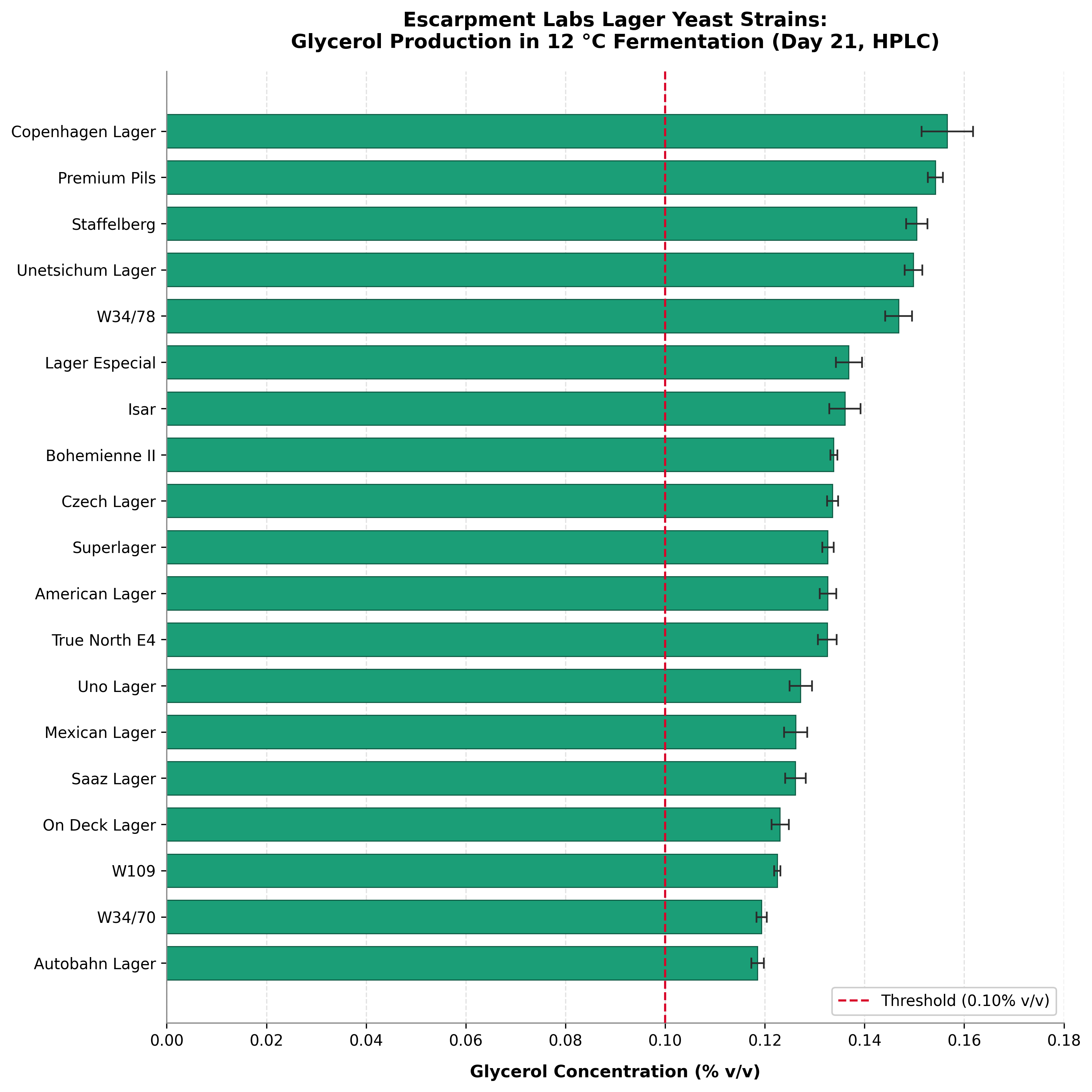
Copenhagen Lager (0.10% v/v in the initial screen at 15ºC; 0.16% v/v at 12 °C) and Premium Pils (0.09% v/v; 0.15% v/v) consistently lead the category as high-glycerol producers in both experiments.
In the cold-fermentation trial, heritage lager yeasts like Staffelberg (0.15% v/v) and Unetsichum Lager (0.15% v/v) similarly clustered in this top tier, providing brewers with a tool to build velvety body and rounded malt fullness in styles like Festbier, Schwarzbier and Dunkel without needing unfermentable dextrins.
Conversely, high-efficiency lager strains like Autobahn Lager, Mexican Lager, and 3470 occupy the low end of glycerol production, which may accentuate perceived dryness.
Practical Brewhouse Levers to Modulate Glycerol
While yeast genetics set the baseline for glycerol production, brewers can tune fermentation conditions to push synthesis higher or lower depending on the style target.
| LEVER | TO INCREASE GLYCEROL | TO MINIMIZE GLYCEROL |
| Yeast Selection | Saison, Kveik, Belgian | Chico, Lagers |
| Starting Gravity | High (>15ºP) | Low (<12ºP) |
| Temperature |
Higher end of strain range (may not be true for lagers) |
Lower |
| Pitch Rate | Slight underpitch | Standard, Overpitch |
| Wort FAN | Moderate/Low | High |
| Fermentables/Adjuncts | More glucose/fructose | No adjuncts |
- Increase Original Gravity: Osmotic stress triggers the GPD1 pathway. Brewing high-gravity beers increases glycerol output, naturally contributing to the thick, chewy mouthfeel expected of these styles.
- Fermentation Temperature: Warmer fermentations accelerate yeast growth rates and metabolic throughput. Rapid biomass division creates a larger surplus of NADH that must be cleared via GPDH, elevating glycerol synthesis.
- Pitch Rate Control: Slightly under-pitching yeast forces the population to undergo more cellular replication cycles to reach final cell density. More cell divisions generate more biosynthetic NADH, shifting carbon toward glycerol. Conversely, heavy over-pitching bypasses extensive biomass synthesis, resulting in lower glycerol yields and a thinner beer.
- Wort Nitrogen (FAN) Balance: If a wort is deficient in Free Amino Nitrogen, yeast must synthesize its own amino acids. These biosynthetic pathways generate significant excess NADH. Under low-FAN conditions, yeast diverts more DHAP into glycerol to rebalance NAD+. Providing balanced FAN maintains standard ethanol fermentation efficiency.
- Pitching Aeration: Adequate oxygen at pitching supports healthy sterol and unsaturated fatty acid synthesis. However, yeast under strict anaerobiosis must rely entirely on internal redox shuttles, maximizing glycerol production relative to biomass.
Research Attribution:
- Initial screen was performed by Isabelle Netto (Escarpment Labs), 2019
- Lager screen was performed by Bryan Chalk (University of Guelph), 2026